Yap keeps giant stone money
On Yap, large stone disks known as rai can represent wealth even when they remain physically where they are. Ownership changes through shared knowledge, proving that an asset does not need to move if the community’s recordkeeping is excellent and the asset is extremely heavy.
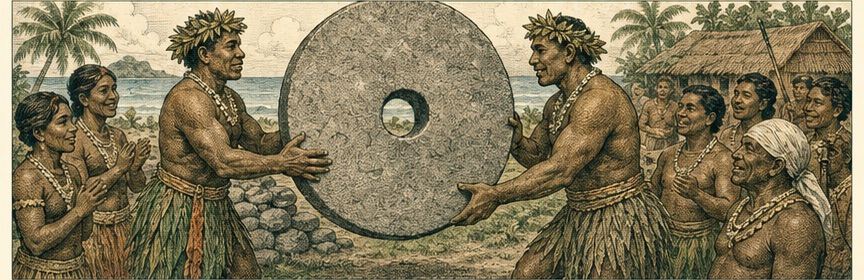
Quarried far from home
Rai stones were quarried mainly in Palau and transported hundreds of miles to Yap, an undertaking that gave them scarcity and a documented history. The disks range from small pieces to stones several feet across, typically with a central hole that assisted transport.
Size mattered, but value also reflected quality, age, difficulty of acquisition and the story of the expedition. A stone associated with danger or loss could acquire greater significance. Provenance was not a footnote; it was part of the monetary value.
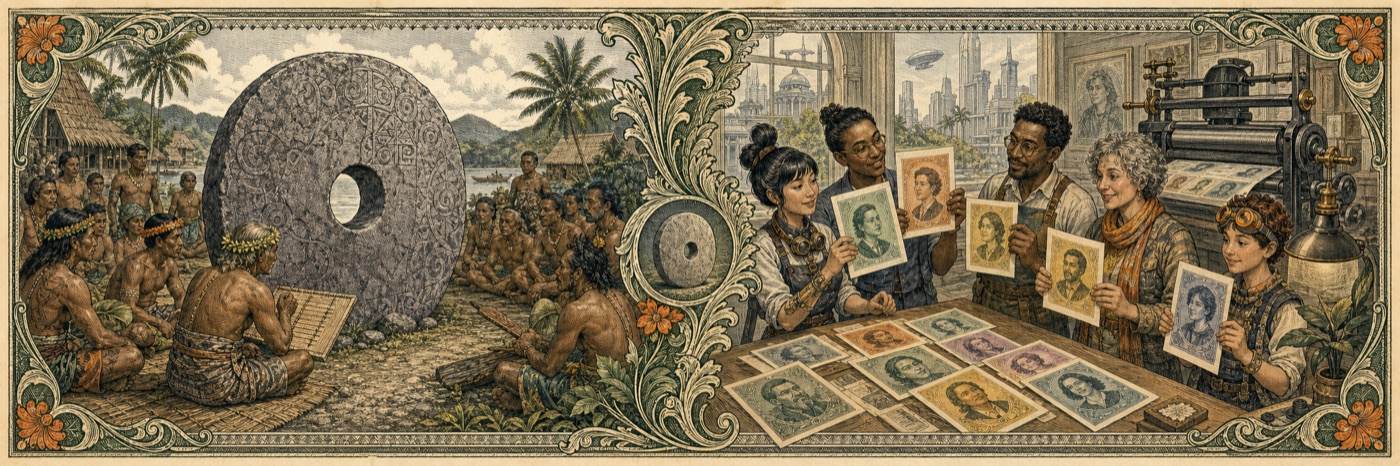
Ownership without relocation
The largest stones often remain outside paths, homes or meeting places. A transaction can transfer recognized ownership while the stone stays put. The community’s knowledge records the change, much as a modern ledger changes a balance without moving a labeled pile of dollars.
Rai have been used in important social exchanges involving land, marriage and obligations, though everyday transactions also used other forms of value. Calling the system simply ‘giant coin money’ misses its ceremonial and social depth.
The institutional finding
Rai money makes a modern idea easy to see: the record of ownership may matter more than physical possession. The stone is the visible anchor for a network of memory and agreement. It is also protected by a security feature known technically as ‘nobody is quietly carrying that away.’
Sources & further reading
These references support the factual claims. The institutional conclusions remain the sole responsibility of our highly decorative committee.
- 01Smithsonian — David O’Keefe and Yap stone money
Historical account of quarrying, transport, value and continued social use.
- 02Bank of England — The future of money
A central-bank discussion that uses Yap stone money to explain ledgers and trust.