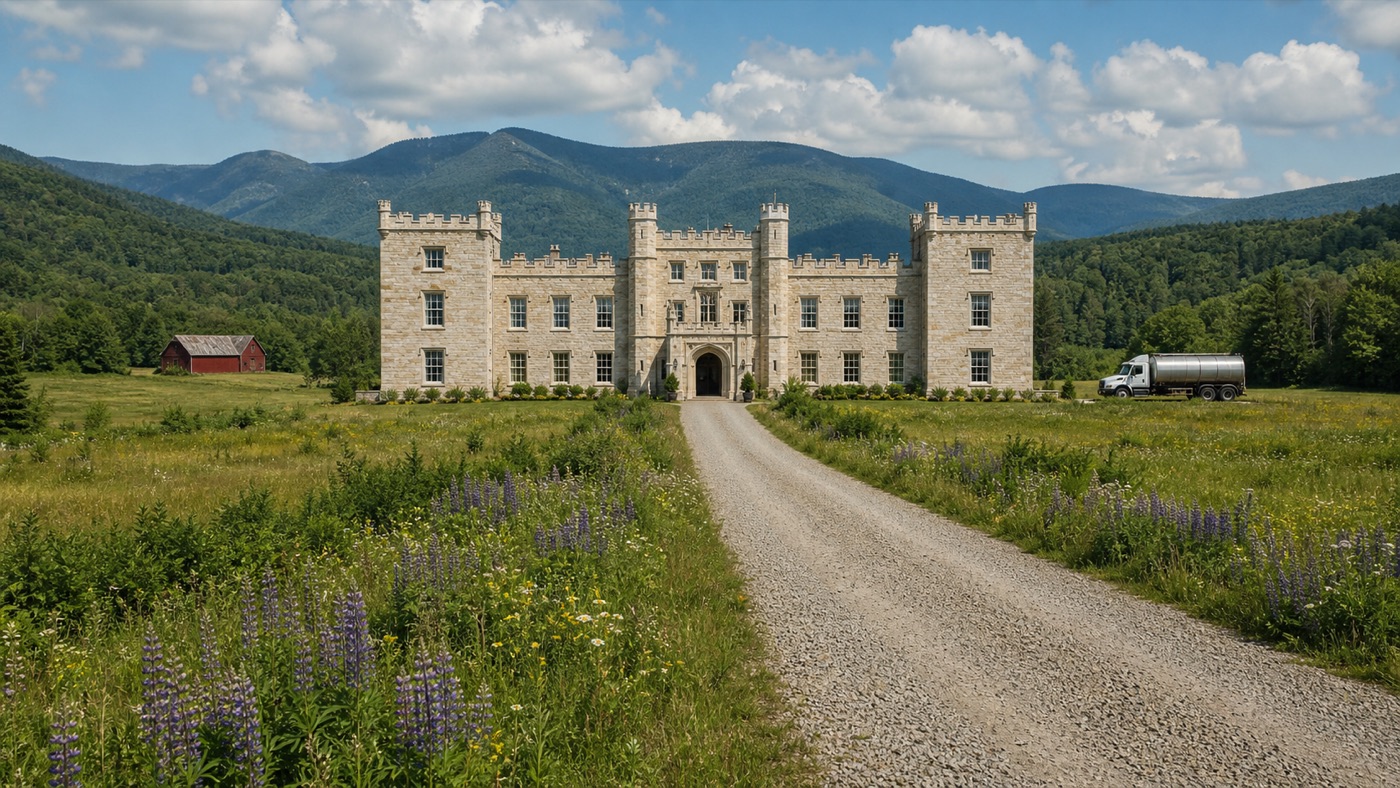
The London office we moved to Vermont without moving it.
Every brick, cornice, floorboard and medieval foundation was numbered, shipped across the Atlantic, briefly misplaced at customs, and rebuilt somewhere north of a town with one traffic light.
Reassembled with historic accuracy and operational denial.
Our Vermont headquarters is modeled on Syon House: the sixteenth-century London residence known for Robert Adam's classical interiors and its position over the remains of medieval Syon Abbey. In our entirely fictional corporate history, the whole institution was duplicated brick by brick—including the inconvenient archaeology beneath it—and set down in a summer landscape bearing no resemblance to its present surroundings.
The actual Syon House remains in London, intact and innocent. Our claim is parody. The architectural details are real enough to make Facilities nervous.
Bricks logged
Most
Foundations omitted
Regrettably, none
Vermont authorities informed
Pending
Public parking
One ambitious field
SELF-GUIDED EXECUTIVE ACCESS
Six rooms. Six leaders. No visible fire exits.
Select a room below. The assigned officer has been told to continue working and not acknowledge that this is a tour.
ROOM 01INSPECTED-ISH
Visitor Intake & Portrait Verification
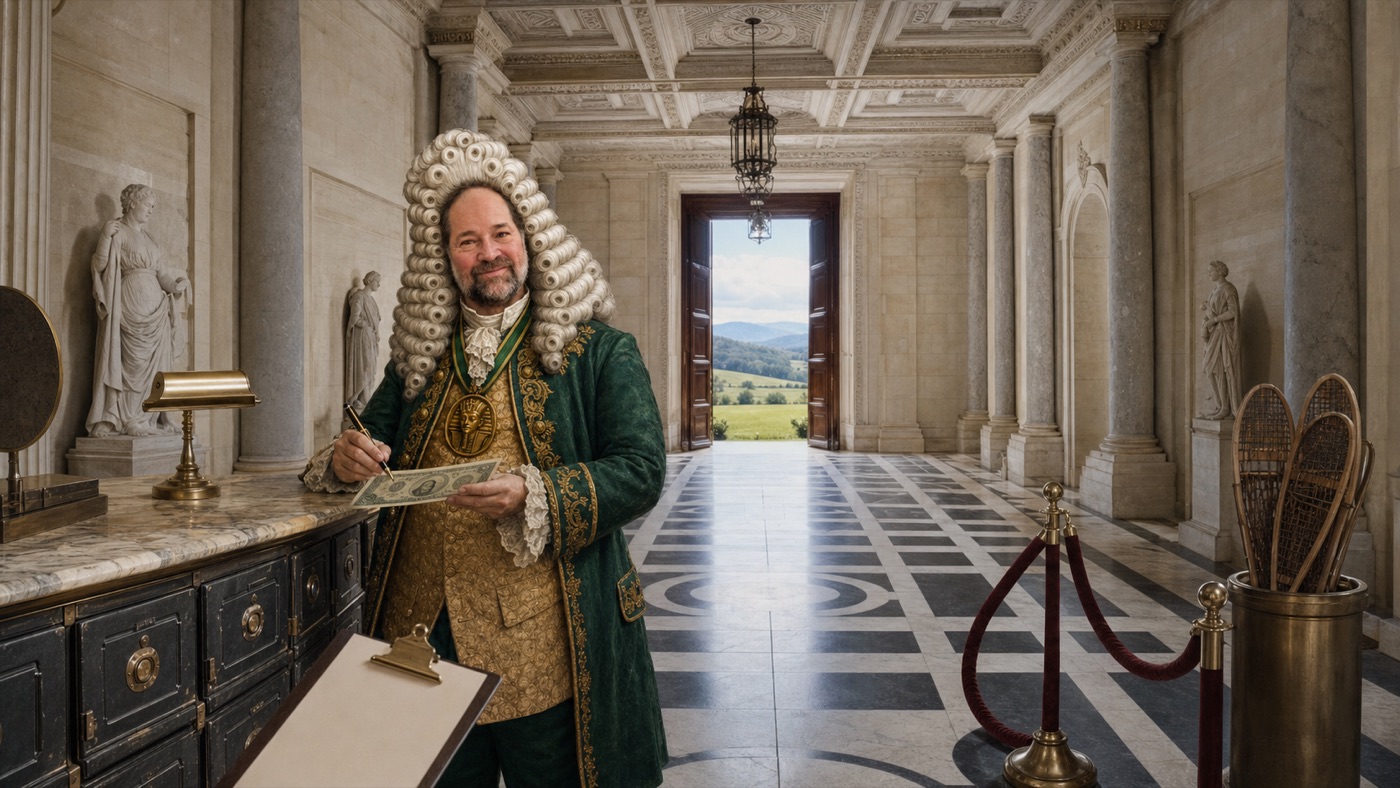
The Great Hall
Wallace Cashington · Founder & Chief Face Officer
ARCHITECTURAL NOTE
The original Great Hall was designed to feel like a Roman basilica, with Doric columns and a black-and-white marble floor whose geometry is answered by the ceiling above.
OFFICIAL USE
All visitors are received here, weighed for confidence, and asked whether the portrait on their identification truly captures their monetary potential.
PROCEDURE OBSERVED
Wallace signs one specimen note per arrival. The velvet rope has no destination. Snowshoes may be checked without appointment.
“We moved the building because the commute from Vermont to London tested poorly.”
Room 1 of 6: The Great Hall, supervised by Wallace Cashington.
01 / 06
ARCHITECTURAL RECEIPTS
The rooms are real. The relocation is not.
Room details were informed by Syon House's official descriptions of the Great Hall, State Dining Room, Red Drawing Room, Long Gallery and Print Room, and by its history on the site of Syon Abbey.