The motto arrives
The national motto appeared on U.S. coins long before it reached paper money. A 1955 law required its use on currency, and Series 1957 one-dollar silver certificates became the first paper notes to carry it.
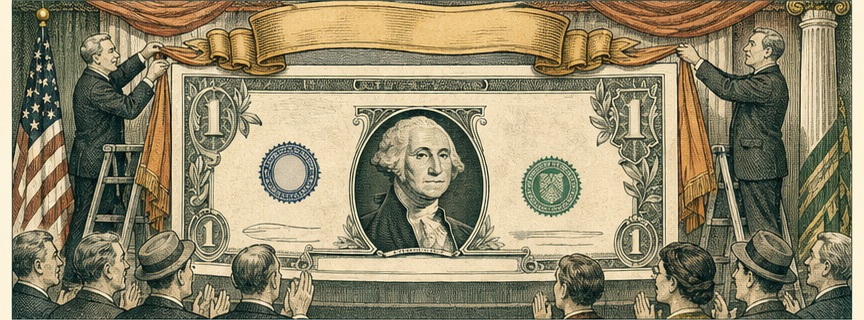
From coin inscription to national motto
‘In God We Trust’ first appeared on a U.S. two-cent coin in 1864. Congress made the phrase the national motto in 1956, during a period when Cold War politics shaped public symbolism. A separate 1955 law required the motto on all U.S. currency.
Paper production cycles meant the change arrived by series rather than overnight. The Series 1957 one-dollar silver certificate was the first U.S. paper currency to display the motto; it later appeared on Federal Reserve notes as designs and plates were updated.
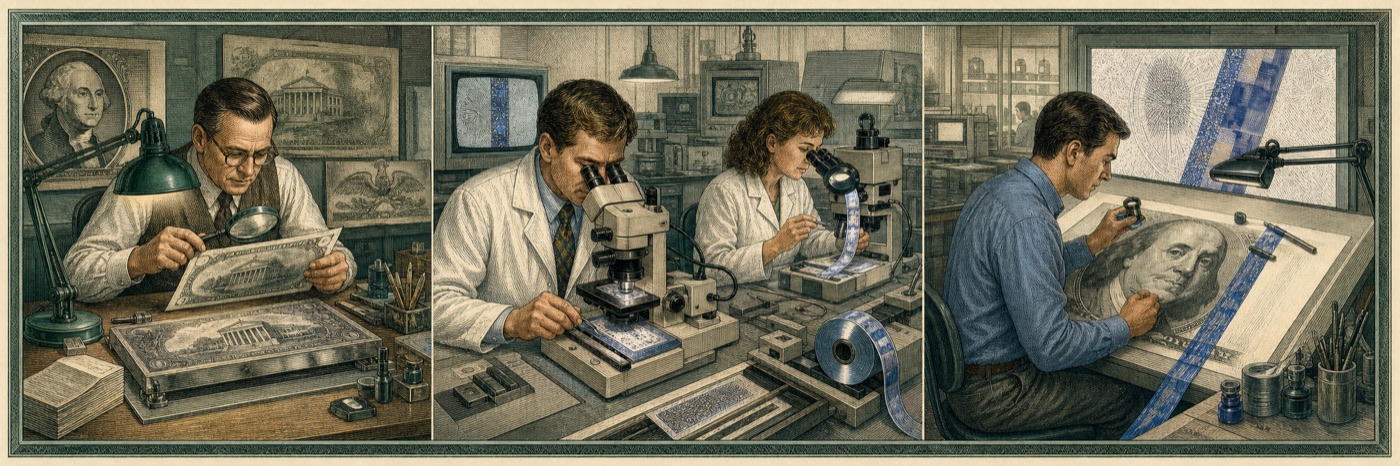
A note is accumulated history
Currency designs rarely begin from a blank page. New inscriptions join portraits, seals, obligations, denomination markers, signatures and anti-counterfeiting features. Each addition reflects a policy choice while competing for limited physical space.
The motto’s placement on the reverse above the word ‘ONE’ made it part of an already familiar composition. The change demonstrates how a visual system can absorb new official meaning while retaining enough continuity that the public still recognizes the object instantly.
The institutional finding
The 1957 change placed a national declaration onto an object already moving through every supermarket, bank and trouser pocket. It was a highly efficient communications campaign: compulsory distribution, excellent repeat exposure and no unsubscribe link.
Sources & further reading
These references support the factual claims. The institutional conclusions remain the sole responsibility of our highly decorative committee.
- 01U.S. Currency Education Program — Archived history
Official timeline for the motto’s appearance on paper currency.
- 02U.S. Treasury — History of ‘In God We Trust’
Treasury history of the motto on coins and currency.