California pays in clams
In 1933, amid banking disruption and a shortage of spendable cash, Pismo Beach, California, briefly put local obligations on clam shells. The result was emergency money with excellent coastal branding and poor compatibility with standard cash drawers.
Emergency currency, locally sourced
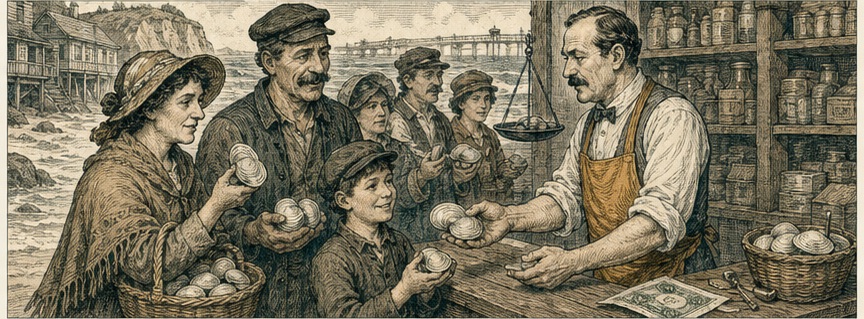
During the national bank holiday of 1933, communities and businesses across the United States created emergency scrip to keep transactions moving. Pismo Beach used large clam shells stamped or inscribed with denominations and official-looking information.
The shells were a temporary claim rather than a new national currency. Their usefulness came from local recognition and an expectation of redemption. An everyday object became spendable because a community faced a shortage and agreed on the procedure.
The souvenir problem
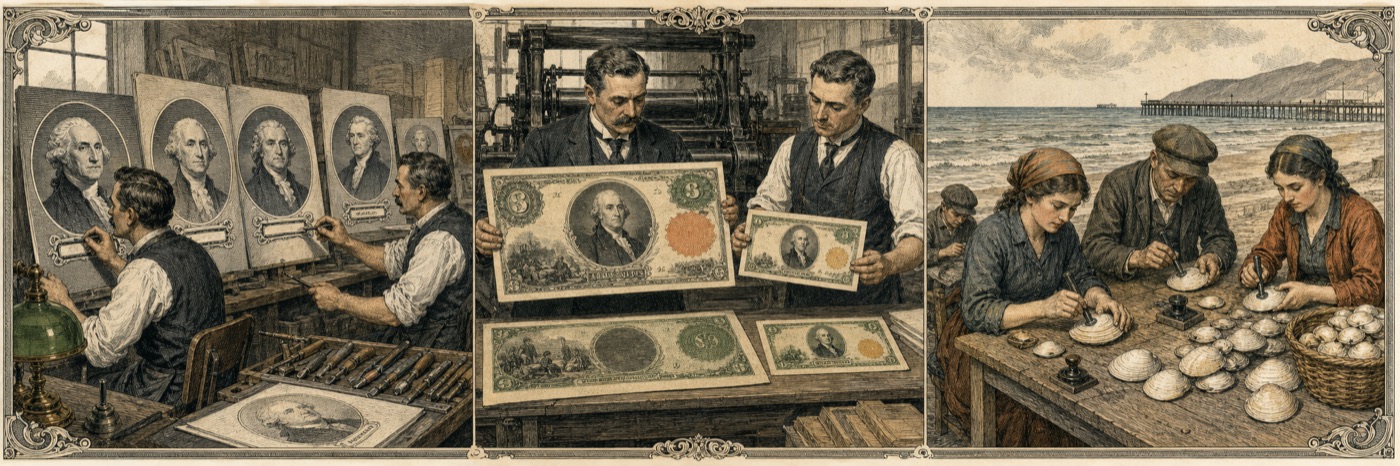
Clam money attracted attention and quickly became collectible. When an emergency instrument is more charming than its face value, holders may remove it from circulation. This is good for tourism, less good for velocity and unusually flattering to the treasury department.
The Smithsonian’s National Museum of American History preserves examples, including a one-dollar shell from 1933. Its physical dimensions make clear how different emergency monies can be from the standardized paper rectangles normally imagined as currency.
The institutional finding
Pismo’s shells illustrate the flexibility of money during crisis. A currency does not need to be universally useful to solve a local exchange problem. It needs understandable terms, trusted issuers and enough participants willing to accept that today, for operational reasons, this clam is a dollar.
Sources & further reading
These references support the factual claims. The institutional conclusions remain the sole responsibility of our highly decorative committee.
- 01Smithsonian NMAH — Pismo Beach clamshell money
Museum collection record for a 1933 one-dollar clam shell.
- 02Newman Numismatic Portal — Depression scrip
Digitized numismatic reference material on emergency money.