Bills lose 30%
In 1929 U.S. paper currency became the size familiar today. The reduction lowered production costs, improved handling and gave every wallet in the nation a brief but measurable increase in available floor space.
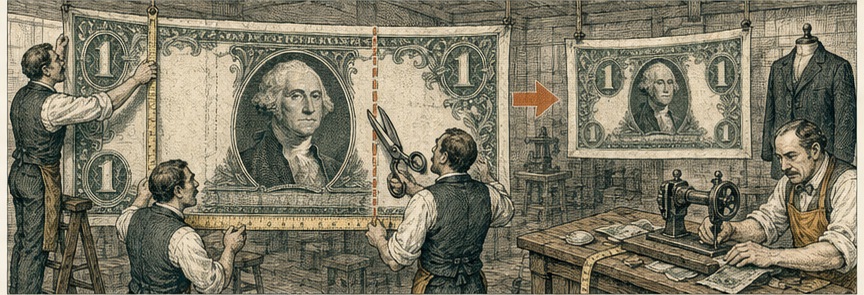
A national resize
Large-size U.S. notes measured about 7.375 by 3.125 inches. The new small-size format measured roughly 6.14 by 2.61 inches, reducing the paper area by about thirty percent. Smaller notes required less material and were easier to process and store.
The change also standardized designs across different classes of currency. Before 1929, national bank notes, gold certificates, silver certificates, United States Notes and Federal Reserve notes could differ substantially in appearance. The new system made denomination and type more consistent.
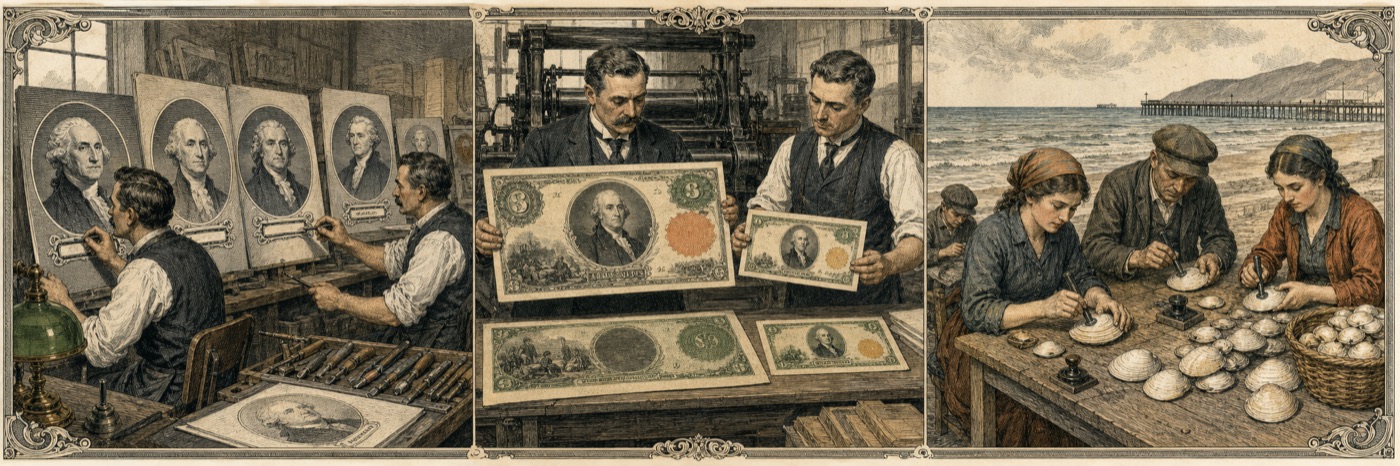
Efficiency becomes visual policy
A format change touches plates, presses, packaging, bank equipment, accounting and public habits. The transition was therefore an industrial project as well as a graphic redesign. Currency is infrastructure that millions of people carry; changing its dimensions is never just a crop.
The smaller format endured through later redesigns. Portraits grew, security features multiplied and colors appeared, but the basic dimensions remained. The most successful redesign decision may be the one subsequent committees decide not to reopen.
The institutional finding
The 1929 resize shows that money’s physical form responds to manufacturing economics. A dollar did not become less valuable because it used less paper. This is fortunate, because otherwise every trimmed margin in government would constitute a monetary crisis.
Sources & further reading
These references support the factual claims. The institutional conclusions remain the sole responsibility of our highly decorative committee.
- 01U.S. Currency Education Program — Archived history
Official timeline and dimensions for the 1929 small-size redesign.
- 02Bureau of Engraving and Printing — Currency history
Production history and institutional context.